



Digital Marketing for Law Firms: A Practical Guide to Predictable Growth

Reference Link: Source
But here’s what most firms miss: that return doesn’t come from viral content or flashy ads. It comes from showing up when someone searches for legal help and being trusted enough to earn the click. That’s the foundation of effective marketing for law firms today.
For decades, law firms relied on a predictable formula: referrals, reputation, and word of mouth. If you were competent and visible in your community, clients found you. That model still works, but it’s no longer enough. Modern law firm marketing requires visibility where today’s clients are actually looking, online.
Today, prospective clients don’t wait for recommendations or flip through directories. They search online the moment a legal problem arises.
This shift has completely reshaped marketing for law firms and how practices compete and grow. Digital strategies are no longer optional in law firm marketing, they’re becoming essential for consistent case acquisition.
By the end of this guide, you’ll see exactly how digital marketing works in practice, how it translates into real cases and revenue, and what your law firm can realistically expect when executed correctly.
How Legal Client Behavior Has Changed
Modern legal clients are intent-driven, time-sensitive, and research-oriented. When someone searches for a lawyer, they are not browsing casually. They are often under stress, facing urgency, and actively evaluating options.
Well, according to our research we found out a thing or two:
People ask questions that are specific to their needs, for example:
- “Personal injury lawyer near me”
- “Best divorce attorney in [city]”
- “Estate planning lawyer for small businesses”
These searches signal immediate demand. The firms that appear at the right moment, with the right message, are the ones that earn consultations.
Today’s clients compare firms before calling. They read reviews, scan websites, and judge professionalism within minutes. Your online presence is often their first impression and sometimes their only one.
The Decline of Referrals-Only Growth
Referrals still matter, but relying on them exclusively creates an unstable growth model. Referral volume fluctuates, is difficult to scale, and is largely outside a firm’s control. More importantly, referrals do not capture the growing segment of clients who start and finish their decision-making process online.
A study was conducted by PRNewswire in which they stated:

Reference Link: Source
Law firms that depend solely on referrals often face:
- Inconsistent lead flow
- Difficulty expanding into new practice areas or locations
- Limited visibility outside existing networks
Digital marketing fills this gap by creating predictable, controllable visibility where modern clients are already searching.
Why Search Visibility = Case Opportunities
In legal marketing, visibility is not about popularity, it’s about intent. Appearing in search results means being present when someone actively needs legal representation. Every high-intent search represents a potential case opportunity.
Search engines, particularly Google, have become the gatekeepers of legal demand. Firms that rank well, organically and locally, consistently receive more inquiries, higher-quality leads, and stronger long-term returns than those that do not.
If your firm is not visible where clients are searching, those opportunities are being captured by competitors who are.
What This Guide Will Cover (Education + Real Results)
This guide is designed to do two things simultaneously:
First, it will educate law firm owners and decision-makers on how digital marketing actually works, beyond surface-level tactics and marketing buzzwords. You’ll gain a clear understanding of SEO, local visibility, content strategy, website optimization, and performance tracking as they apply specifically to law firms.
Second, and more importantly, this guide connects strategy to real-world outcomes. Throughout the article, we will reference real law firm case studies to show how these strategies translate into measurable results, from increased visibility to qualified leads and tangible ROI.
Rather than theory alone, you’ll see:
- What was implemented
- Why it worked
- Why it worked
- Realistic outcomes law firms can expect when done right
By the end of this guide, you’ll not only understand what digital marketing for law firms involves, you’ll understand how it produces growth, and why it has become essential in today’s legal landscape.

Chapter 1: Understanding In Detail
How Potential Clients Search for Lawyers Today
Understanding how modern clients look for legal help is the foundation of effective digital marketing. Unlike traditional referral-driven discovery, prospective clients now begin their journey online, often with urgency, intent, and specificity that directly signals their readiness to hire.
High-Intent Legal Searches Explained
People don’t search for “lawyers” out of curiosity, they search because they need help. When someone types in a query like:
- “Personal injury lawyer near me”
- “Best family law attorney in Houston”
- “Estate planning attorney”
- “DUI lawyer open now”
…they are actively seeking legal assistance, not just browsing. These are examples of high-intent search queries, meaning the searcher is in a decision-making phase and closer to converting into a lead or client.
This differs significantly from informational searches like “what does a divorce lawyer do,” which signal earlier stages of research. High-intent search terms, especially those including local or practice-area modifiers, often directly correlate with client acquisition opportunities.
Search data shows that a large majority of legal queries include either practice area, location, or urgency indicators. For example, a common pattern across local SEO data is that a high portion of searches include “attorney” or “lawyer” along with a city or “near me” modifier, which signals readiness to contact a local firm rather than just research legal information.
“Near Me,” Practice-Area, and Urgency-Driven Searches
In today’s mobile-first world, a growing percentage of search activity happens on smartphones and many of those searches include words like near me, [city], or urgent because clients want help right now.
Studies show:
- Around half of all Google searches have local intent, where the user is looking for nearby services.
- A significant percentage of local searches, especially on mobile, are completed with calls or visits within 24 hours.
For law firms, this means that appearing in local search results when someone types “DUI attorney near me” isn’t just visibility, it’s capturing a moment of real legal demand.
At the same time, practice-area keywords like “child custody lawyer [city]” or “probate attorney in [region]” help you match not just any search, but the right search, the ones that indicate people looking for the exact legal help your firm offers.
Why Google Dominates Legal Client Acquisition
There are three core reasons Google is the central battleground for legal searches:
- User Behavior Patterns
Over 70% of legal service seekers still start with a Google search when they need legal help rather than referrals or directories. - Local & Organic Integration
Google shows both organic results and local map results (often called the “Local Pack”) for service-based searches. The Local Pack, with a map and top three local firms, captures a disproportionate share of clicks and calls because it’s so prominent on search result pages. - Decision-Stage Signals
Google’s algorithms are designed to show results that best match search intent, meaning intent to act. High-intent legal searches such as “personal injury lawyer near me” are weighted toward listings with strong local relevance, reviews, and service-specific authority.
This dominance of Google means that if your firm isn’t well represented in both organic search and maps results, you’re effectively invisible at the moments when potential clients are most ready to engage.
What This Means for Small, Mid-Size, and Multi-Location Firms
Understanding modern search behavior is essential, but the implications differ by firm size and structure:
- Solo and Small Firms
These firms often rely on local searches in nearby cities or neighborhoods. Appearing in the Google Local Pack for core practice areas can be a major competitive advantage, especially since many clients only contact one or two attorneys before hiring. - Mid-Size Firms
Firms with multiple practice areas need to rank for a broader set of intent-driven queries. This means optimizing not just for “family lawyer near me,” but also keywords like “divorce attorney for military families” or “estate planning for entrepreneurs.” Specific keyword strategies improve both reach and lead quality. - Multi-Location Firms
Searches vary by region. People in Houston search differently than those in Mississauga or Chico. Multi-location firms need tailored local SEO, including dedicated pages, localized content, and separate Google Business Profiles, to capture intent across each service area.
Understanding how clients search informs every part of your digital marketing strategy, from how you optimize your website, to how you structure service pages, to how you prioritize local SEO efforts. Later in this guide, you’ll see how these concepts play out through real results from our four law firm case studies.
What Digital Marketing for Law Firms Really Includes
Digital marketing for law firms is often discussed in fragments, SEO, websites, content, local SEO but potential clients don’t experience it in fragments. They experience it as a single journey, beginning with a search and ending with a phone call, form submission, or consultation.
To market a law firm effectively, it’s critical to understand how each digital component contributes to that journey and why omitting or underdeveloping even one element weakens the entire system.
At its core, successful digital marketing for law firms is about visibility, trust, and conversion, all working together to turn search demand into real cases.
Search Engine Optimization (SEO)
SEO is the foundation that determines whether a law firm is visible at the moment legal help is needed.
When potential clients search for legal services, they are not browsing casually, they are looking for answers, solutions, and representation. SEO ensures that a law firm’s website appears in those moments for relevant, service-based searches.
For law firms, SEO goes beyond ranking a homepage. It involves:
- Optimizing individual practice-area pages for specific legal services
- Ensuring content aligns with real client search behavior
- Establishing authority and trust through accurate, comprehensive information
- Structuring the website so search engines clearly understand what the firm offers
Unlike short-term advertising, SEO compounds over time. Each ranking improvement, content update, and technical enhancement strengthens future performance rather than resetting monthly.
Local SEO & Google Business Profile
While SEO builds visibility across organic search results, local SEO determines who gets contacted first.
Most legal searches are location-driven. Prospective clients want help nearby, which is why searches frequently include city names or “near me” modifiers. Local SEO ensures that a law firm appears in these geographically focused searches, especially within Google Maps and local listings.
A well-optimized Google Business Profile plays a critical role in this process. It often serves as the first point of interaction between a law firm and a potential client, displaying:
- Practice areas
- Reviews and ratings
- Contact details
- Business credibility signals
For many law firms, Google Business Profile generates phone calls even before a user visits the website. Without strong local optimization, firms risk losing high-intent leads to competitors with better visibility.
Content Marketing for Legal Authority
Visibility alone is not enough. Once a potential client finds a law firm, they evaluate whether it is credible, knowledgeable, and trustworthy.
This is where content becomes essential.
Content marketing for law firms is not about volume, it’s about relevance and clarity. Strong legal content:
- Answers real client questions in plain language
- Shows expertise in specific practice areas
- Helps search engines understand topical authority
- Reduces hesitation before contacting the firm
Practice-area pages, FAQs, educational articles, and explanatory resources all play a role in guiding prospective clients from uncertainty to confidence. In competitive legal markets, content quality often determines not just who ranks, but who converts.
Website Performance & Conversion Optimization
Many law firm websites attract visitors but fail to turn those visitors into leads. The issue is rarely traffic, it’s clarity.
Website optimization focuses on ensuring that when someone lands on a law firm’s site, they immediately understand:
- What legal services are offered
- Who those services are for
- Why the firm is qualified to help
- How to take the next step
Clear calls-to-action, intuitive navigation, fast load times, and mobile responsiveness all directly impact conversion rates. Even minor improvements in usability and messaging can significantly increase the number of consultations generated from existing traffic.
Tracking Leads and Return on Investment (ROI)
Without measurement, digital marketing becomes speculation.
Successful law firms track outcomes, not just activity. This includes monitoring:
- Phone calls
- Contact form submissions
- Consultation requests
- Lead quality and trends over time
Tools like Google Analytics, Search Console, call tracking, and CRM platforms allow firms to understand which efforts generate real business. This data enables informed decisions about where to invest, what to refine, and how to scale growth sustainably.
How These Components Work Together
Digital marketing is not a set of isolated tactics. It is a connected system.
- SEO drives visibility.
- Local optimization captures intent.
- Content builds trust.
- Websites convert interest into action.
- Video reinforces credibility.
- Tracking ensures accountability.
When these elements align, digital marketing becomes predictable, scalable, and measurable, rather than experimental.
With this foundation established, the next section will break down SEO for law firms in detail, why it consistently outperforms most long-term strategies, and how it drives high-intent client acquisition when executed correctly.
Chapter 2 : SEO for Law Firms
Search Engine Optimization is not just one part of digital marketing for law firms. Instead, it is the framework that supports long-term, sustainable client acquisition. While many firms rely heavily on paid advertising or referrals, SEO consistently proves to be the most durable and cost-effective channel for firms that want predictable growth.
To understand why, it’s important to look at how SEO differs from other strategies, what type of traffic actually matters, and how Google evaluates law firm websites today.
Why SEO Outperforms Most Long-Term Ad Strategies
Paid advertising can generate quick visibility, but it comes with a fundamental limitation: the moment spending stops, results disappear.
SEO operates differently.
Once a law firm earns strong organic rankings for practice-area and location-based searches, those positions continue to generate visibility, traffic, and leads without requiring constant ad spend. Over time, this creates a compounding effect, each optimization builds on the last.
Allow us to show you some data we have collected from our case studies, this pattern is consistent in almost all of them:
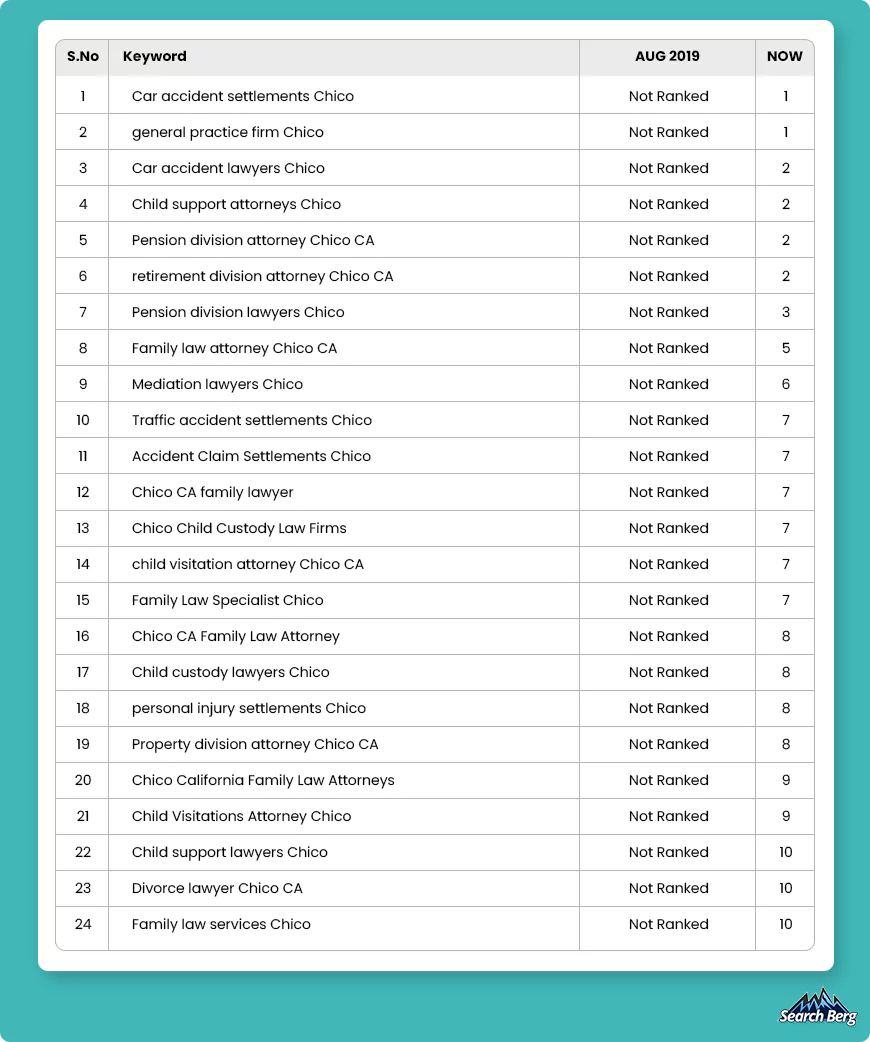
- Ron Marquez Law Corp moved from having virtually no keyword visibility to ranking on the first page for 24 targeted local terms, many in top 1–3 positions. These rankings continued to drive traffic and leads well beyond the initial optimization phase.
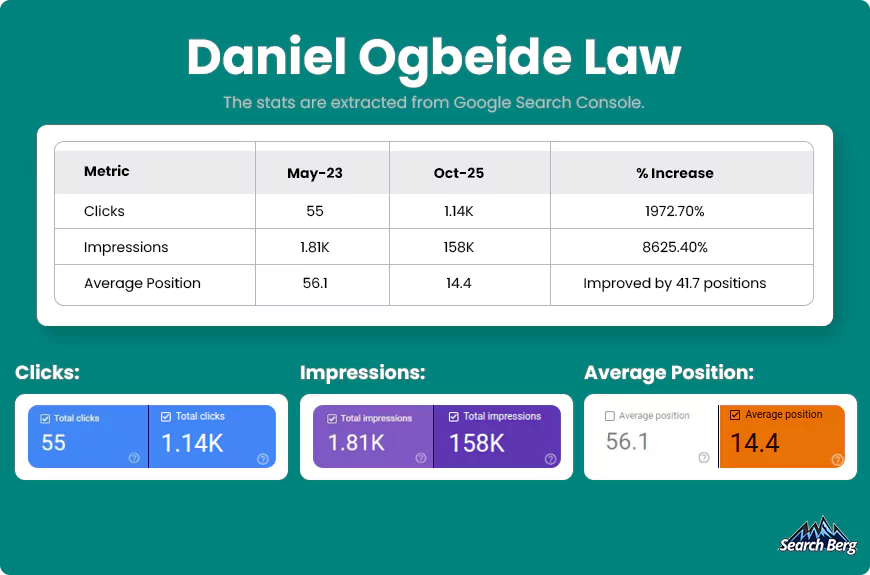
- Daniel Ogbeide Law saw organic traffic grow from 82 users to over 1,611 users per month, a nearly 19x increase, while also improving average search position by more than 40 spots. These gains were sustained through structured SEO execution rather than ongoing ad dependency.

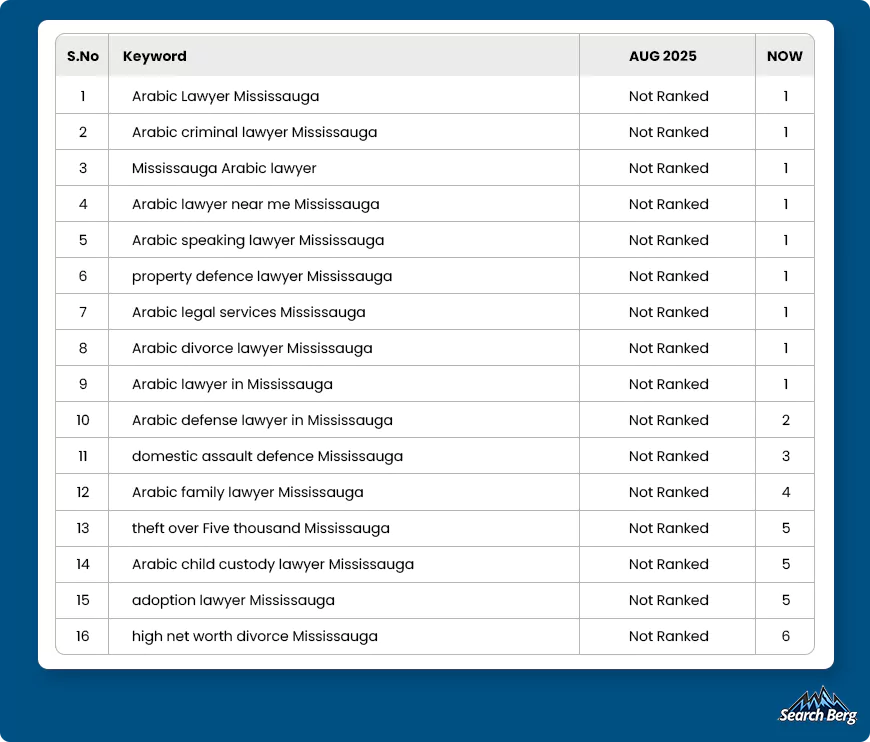
- Rashidy & Associates achieved first-page rankings for over 90% of targeted keywords within just three months, including multiple #1 positions for high-intent Arabic-language legal searches.
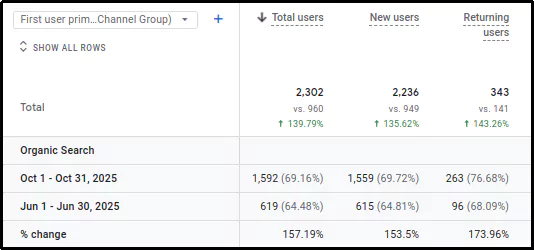
- Mike Massey Law, PLLC experienced a 157% increase in organic users over five months, demonstrating how SEO can produce meaningful growth even in highly competitive legal niches like estate planning and personal injury.
The key takeaway is not speed, it’s durability. SEO continues working even when marketing budgets fluctuate.
The Difference Between Traffic and Buyer-Intent Traffic
One of the most common misconceptions about SEO is that more traffic automatically means more clients. In legal marketing, this is rarely true.
What matters is buyer-intent traffic.
Buyer-intent searches are queries made by people who are actively looking to hire an attorney. These searches typically include:
- Practice areas (family law, personal injury, estate planning)
- Location modifiers (city, state, or “near me”)
- Urgency or service-specific terms (consultation, lawyer, attorney)
For example:
- “Car accident lawyers Chico”
- “Houston family law attorney”
- “Arabic lawyer Mississauga”
- “Revocable living trust lawyer Austin”
Across our Law firm case studies, ranking improvements were not focused on generic informational terms, they were focused on service-driven searches that lead to consultations.
This distinction explains why SEO campaigns that prioritize relevance over volume outperform campaigns chasing raw traffic numbers. A smaller number of highly qualified visitors will consistently outperform large volumes of low-intent traffic.
How Google Evaluates Law Firm Websites (E-E-A-T, Trust, and Relevance)
Google applies especially high standards to legal websites because legal services fall under what Google classifies as “Your Money or Your Life” (YMYL) content. This means inaccurate or misleading information can directly impact a person’s well-being or financial stability.
As a result, Google evaluates law firm websites based on three critical factors:
Experience, Expertise, Authoritativeness, and Trust (E-E-A-T)
Law firm websites are expected to show:
- Clear legal expertise within specific practice areas
- Real-world experience, reflected through detailed service pages and case-relevant content
- Trust signals such as credentials, location clarity, and consistent branding
- Accurate, well-structured, and professionally written content
Let’s take an example from our case studies:
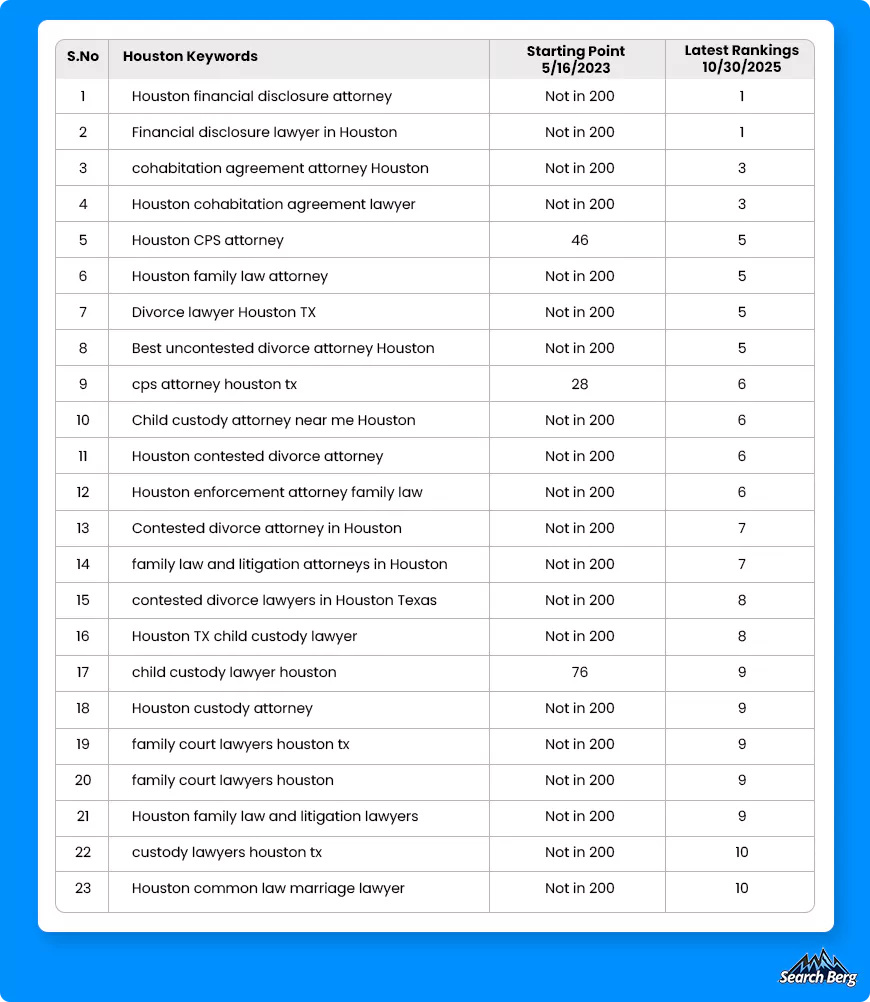
- Daniel Ogbeide Law improved rankings after redesigning and optimizing service pages, strengthening content depth, and aligning pages with actual legal search intent.
Keyword Rankings:
Relevance and Search Intent Alignment
Google does not rank pages simply because keywords are present. Pages must clearly match the intent behind the search.
For example, a page targeting “family law attorney Houston” must show:
- Clear family law focus
- Houston-specific relevance
- Structured information addressing common family law needs
This is why targeted service pages consistently outperform generalized content in legal SEO campaigns.
Trust Signals and Local Authority
Local trust signals, such as consistent business information, reviews, and Google Business Profile optimization, reinforce credibility. In competitive legal markets, these signals often determine which firms appear on page one and in local map results.
What the Data Confirms
Across all case studies, one conclusion is clear: SEO success for law firms is driven by relevance, trust, and intent, not shortcuts.
Firms that aligned content, local optimization, and technical foundations consistently saw:
- First-page keyword growth
- Sustained organic traffic increases
- Measurable lead generation improvements
SEO does not replace other marketing channels, but it forms the core infrastructure that allows everything else to work more effectively.
In the next section, we’ll go over Local SEO and Google Business Profile optimization, and why map visibility often produces the fastest and highest-converting results for law firms.
Chapter 3: Local SEO & Google Business Profile
For most law firms, especially those serving specific cities or regions, local search visibility is often the difference between steady inbound calls and inconsistent lead flow.
While organic rankings matter, local SEO determines who appears first when a potential client searches for legal help nearby. In many cases, it determines who gets contacted at all.
Understanding how Google Maps, local results, and Google Business Profile work together is essential for law firms competing in crowded markets.
Maps vs. Organic Results
When someone searches for a lawyer, Google frequently displays two prominent result types:
- Local Map Pack (Google Maps results)
- Traditional organic listings
The map pack appears at the top of the page and typically includes three local businesses, along with phone numbers, reviews, and directions. For high-intent legal searches, this section attracts a significant share of clicks and calls.
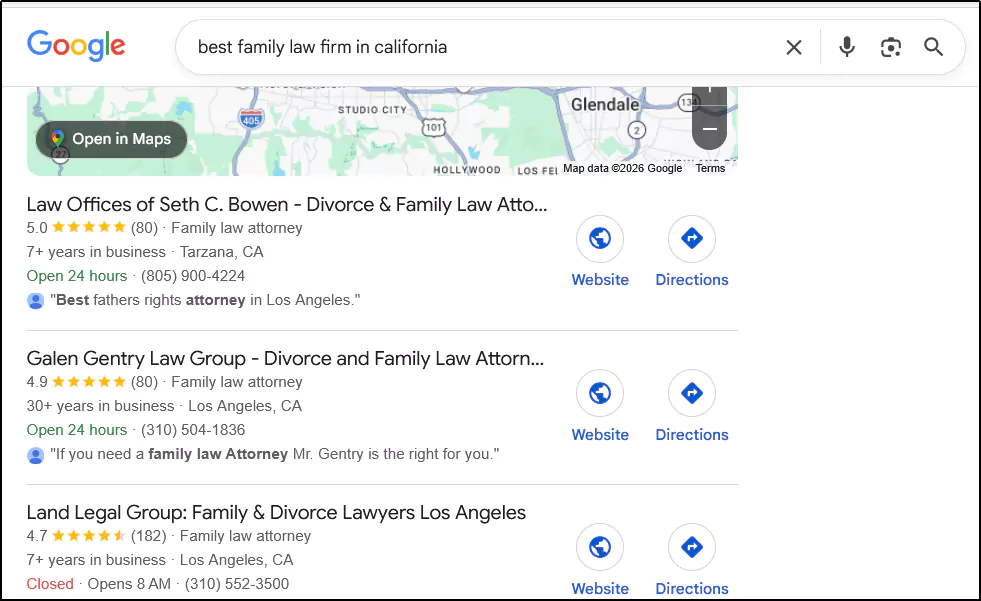
In practice, many users:
- Call directly from the map listing
- Choose firms with strong reviews and proximity
- Never scroll down to organic results
This behavior is especially common for urgent legal needs such as family disputes, injuries, or estate planning consultations.
Across your case studies, improvements in Google Business Profile visibility consistently correlated with increased call volume, often faster than organic rankings alone.
Why Google Business Profile Is Critical for Law Firms
Google Business Profile (GBP) is one of the highest-converting digital assets a law firm can have.
Unlike website traffic, GBP interactions are action-oriented. Users viewing a profile are often deciding whether to:
- Call the firm
- Request directions
- Visit the website
- Schedule a consultation
This makes GBP especially important for practice areas where clients act quickly and locally.
Let us show you some examples from our case studies:
Family Law
Family law searches are often emotionally driven and time-sensitive. Prospective clients want nearby, reputable representation.
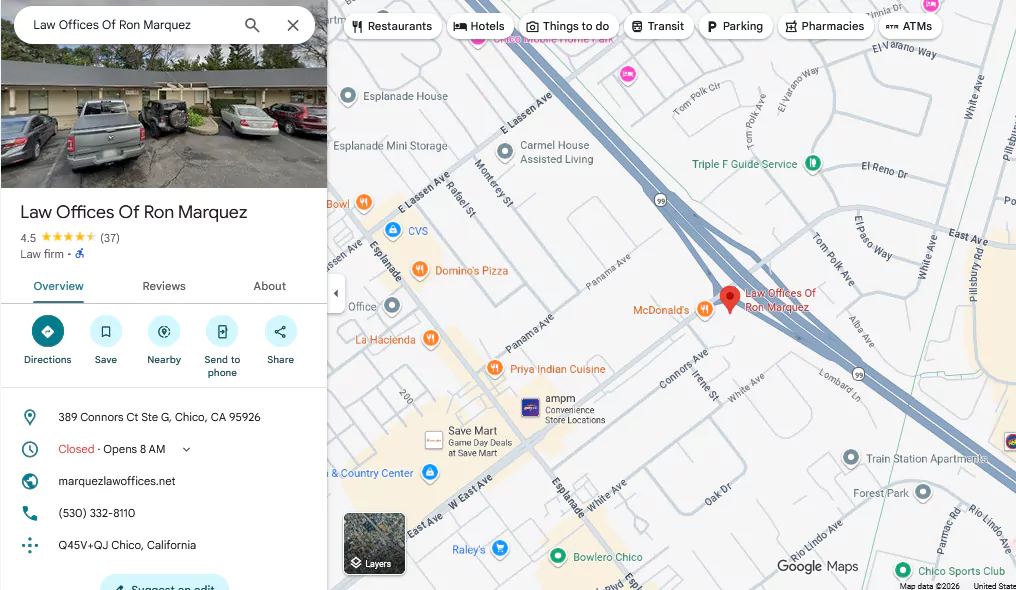
Ron Marquez Law Corp saw strong map visibility improvements after resolving a suspended GBP and optimizing local signals. Over five months, the firm received 226 calls directly from Google Business Profile, demonstrating how local optimization translates into real inquiries.
Personal Injury
Personal injury clients often search immediately after an incident. Map visibility ensures a firm appears during that critical decision window.
- In both Ron Marquez Law Corpand Daniel Ogbeide Law, local SEO enhancements contributed to increased calls and interactions, particularly for injury-related searches.
Website Performance:
Google Business Profile:
The stats are extracted from Google Business Profile.
Profile Interactions:
319 (May–Jun 2023) → 374 (Oct 2025)

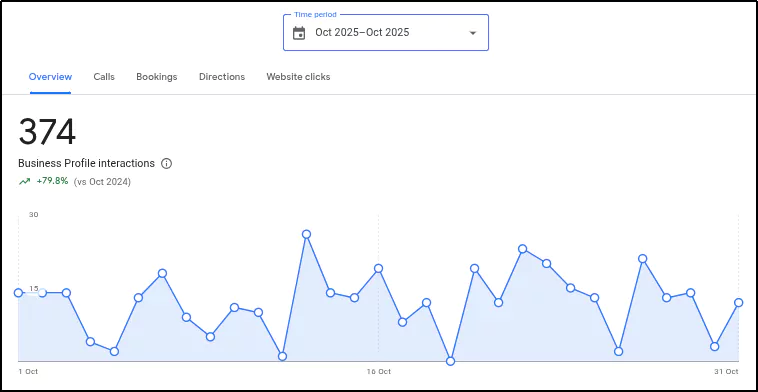
Calls:
14 (May–Jun 2023) → 140 (Oct 2025)

Ron Marquez Law Corp:
LEADS FROM GOOGLE MY BUSINESS PROFILE:
Over the past five months, the client has received a total of 226 calls, reflecting steady engagement and growth in lead activity.

Estate Planning
Estate planning clients prioritize trust and proximity. A well-optimized GBP reinforces legitimacy before a website visit even occurs.
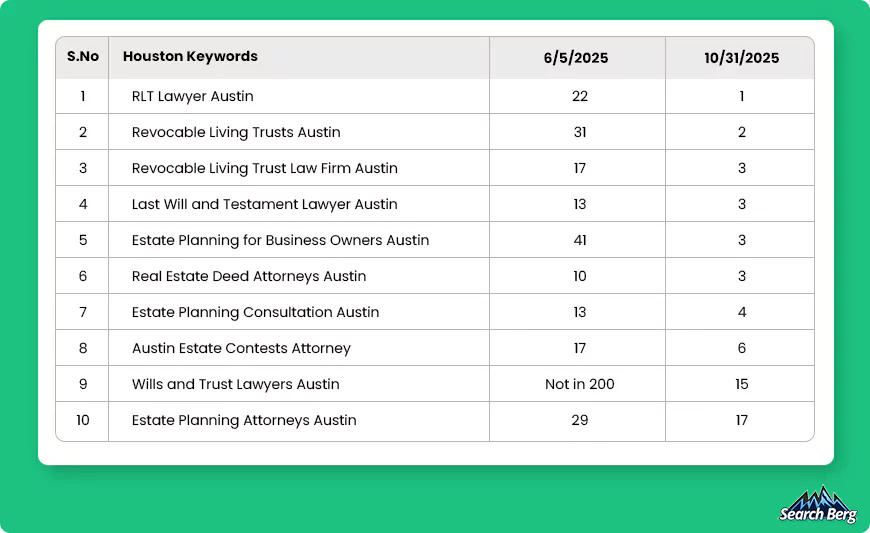
- Mike Massey Law, PLLCstrengthened local visibility across Austin and Houston through citation consistency and profile optimization, supporting steady increases in organic and returning users.
Below is the table of the keyword performance progress between June 2025 and October 2025: Feature keywords with austin
Local SEO in Practice: What Drives Visibility
Local SEO extends beyond simply creating a Google Business Profile. Google evaluates multiple signals to determine which firms appear in map results, including:
- Business proximity to the searcher
- Relevance of services listed
- Profile completeness and accuracy
- Engagement (calls, clicks, activity)
- Review quality and consistency
- Citation accuracy across directories
When these elements align, firms earn stronger map placements and more consistent lead flow.
Chapter 4: Website Optimization for Law Firms
For most law firms, website optimization is the missing link between rankings and real cases.
Many firms invest in SEO or ads, see traffic increase, and still wonder why the phone isn’t ringing. The issue is rarely visibility alone. It’s what happens after a potential client lands on the site. If the structure is confusing, the content is shallow, or the next step is unclear, even high-intent visitors leave without converting.
Website optimization ensures that when someone searches for legal help and clicks through, the site immediately answers three questions:
- Can you handle my case?
- Do you serve my area?
- What should I do next?
Across all case studies, meaningful growth only followed once the websites were rebuilt around search intent, trust signals, and conversion paths.
Why Law Firm Websites Commonly Fail to Convert
Most law firm websites are built like brochures rather than acquisition tools. They describe the firm but fail to guide the user.
The most common issues we see include:
- Service pages that are too generic and not aligned with how clients search
- Lack of geographic relevance, even for local practices
- Weak or inconsistent calls to action
- Poor internal linking that leaves important pages isolated
- Thin content that doesn’t show experience or authority
- Technical issues that suppress rankings and user engagement
Google may still index these sites, but it won’t prioritize them and users won’t trust them.
Website optimization fixes this by aligning how Google evaluates pages with how real clients make decisions.
Aligning Pages With How Clients Actually Search
Potential clients don’t think in terms of “practice areas” or firm branding. They search based on problems, urgency, and location.
That’s why one of the most impactful changes across our campaigns was the creation of intent-focused service and location pages. Instead of trying to rank one generic page for multiple regions, we structured pages to clearly match specific searches such as estate planning in Austin, probate services in Houston, or family law representation in surrounding counties.

This approach serves two purposes at once:
- It increases relevance in Google’s eyes by matching precise search intent
- It reassures users immediately that the firm serves their location and case type
When visitors land on a page that mirrors their search, they stay longer, engage more, and convert at higher rates. That’s why location-specific and practice-specific pages consistently supported ranking improvements and traffic growth across multiple firms.
Strengthening Content for Trust and Authority (E-E-A-T)
Legal clients are cautious by nature. Before reaching out, they scan for signs of experience, credibility, and professionalism. And Google does the same.
That’s why content depth was a major focus during optimization. Service pages were expanded and refined to:
- Clearly explain legal services in plain language
- Address common client concerns and scenarios
- Showing subject-matter expertise without legal jargon
- Reinforce trust through structure, clarity, and completeness

Instead of thin descriptions, pages were treated as authoritative resources, not blog posts, but decision-support content. This helped satisfy Google’s Experience, Expertise, Authoritativeness, and Trustworthiness guidelines while also giving users confidence to move forward.
This shift played a direct role in first-page rankings and stronger engagement metrics, especially in competitive and niche markets.
Structuring the Website to Support Growth
Optimization isn’t just about individual pages. It’s about how the entire site works together.
Across the case studies, we improved:
- Website structure so core services were easy to find and understand
- Internal linking to pass authority between related practice areas
- URL structure to improve clarity and keyword relevance
- Page hierarchy so Google could properly evaluate importance
- Mobile performance and loading speed to reduce drop-offs
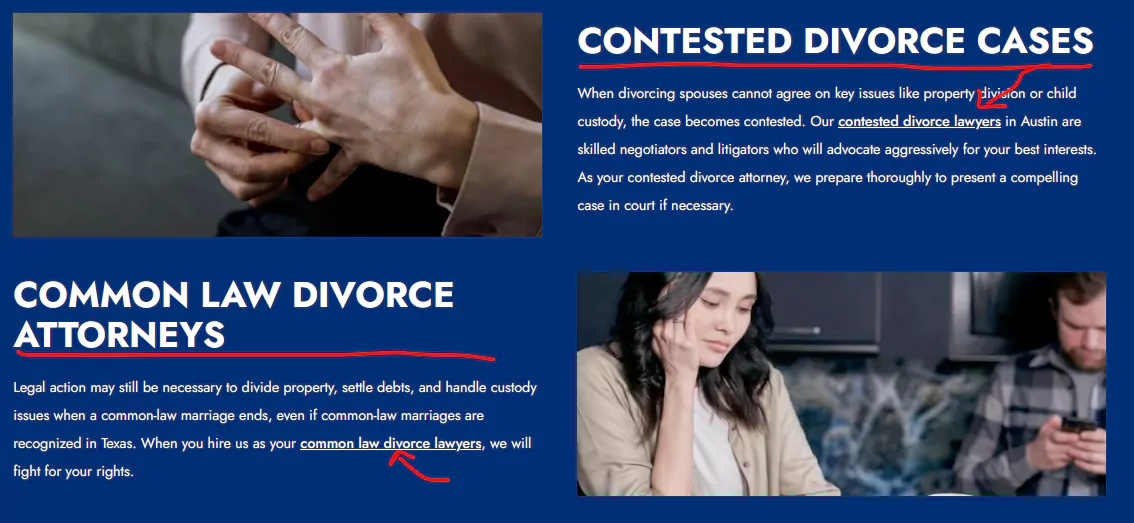
These changes don’t just improve rankings, they remove friction. When users can move naturally from one relevant page to another, they spend more time on the site and are more likely to convert.
Making Conversion the Priority, Not an Afterthought
Traffic alone doesn’t grow a law firm. Conversions do.
Every optimized page was built with a clear next step:
- Strategic call-to-action placement
- Language that encourages consultations without pressure
- Contact pathways that are visible without being intrusive
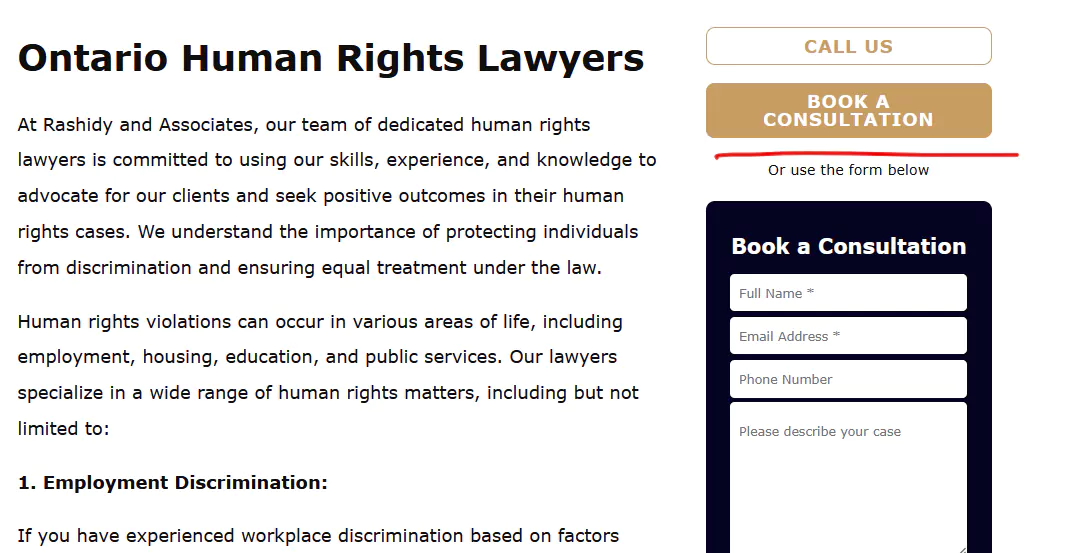
Rather than relying on a single contact page, CTAs were integrated throughout service pages so users could act the moment they felt ready.
This approach directly supported increases in form submissions, calls, and verified leads across multiple firms
The Real Role of Website Optimization in Law Firm Marketing
Website optimization is not separate from SEO, local search, or content, it’s what makes them work together.
- SEO brings the right visitors.
- Local optimization brings nearby prospects.
- Website optimization turns both into clients.
The firms highlighted in this guide didn’t grow because they had “better websites.” They grew because their websites were designed around intent, trust, and action — and supported by a solid technical foundation.
For law firms serious about digital growth, website optimization isn’t optional. It’s the system that converts visibility into revenue.
Chapter 5: Common Local SEO Mistakes Law Firms Still Make
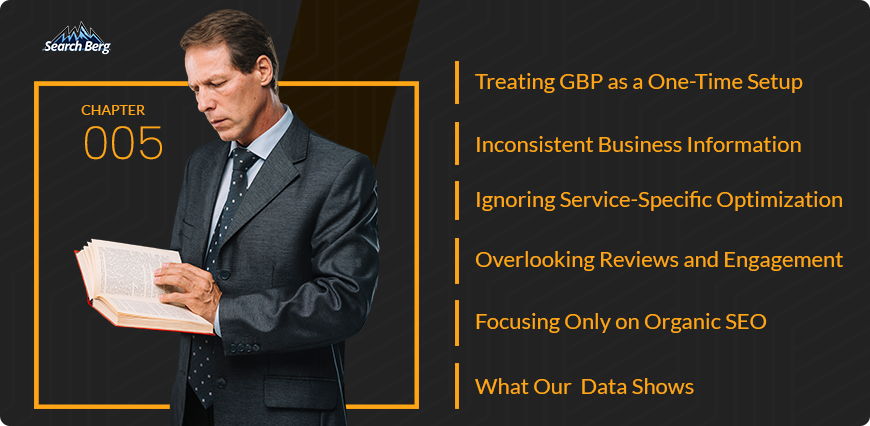
Despite its importance, local SEO is often underdeveloped or mismanaged. Some of the most common issues include:
Treating GBP as a One-Time Setup
Many firms create a profile and never update it. In contrast, profiles that are actively optimized, updated, and aligned with services tend to outperform static listings.
Inconsistent Business Information
Mismatched addresses, phone numbers, or firm names across directories weaken trust signals and reduce local ranking strength.
Ignoring Service-Specific Optimization
Listing “law firm” without clearly defining practice areas limits relevance. Firms that specify services perform better in both maps and organic local results.
Overlooking Reviews and Engagement
Reviews influence both rankings and conversion decisions. A strong review profile reinforces credibility and increases the likelihood of calls.
Focusing Only on Organic SEO
Firms that invest heavily in website SEO but ignore local optimization often miss the highest-intent traffic, users ready to call immediately.
What Our Data Shows
Across all case studies, improved local SEO and Google Business Profile optimization led to:
- Increased calls and profile interactions
- Faster lead generation compared to organic SEO alone
- Stronger visibility in competitive local markets
Local SEO does not replace organic rankings, it amplifies them. When combined with strong SEO foundations, it becomes one of the most reliable growth drivers for law firms.
Chapter 6: Common Digital Marketing Mistakes Law Firms Still Make
Many law firms invest in digital marketing but fail to see consistent growth. In most cases, the issue is not the lack of effort, it’s misaligned priorities.
Digital marketing for law firms requires precision. When strategy focuses on the wrong metrics or skips foundational elements, results plateau quickly. Below are the most common mistakes that continue to limit growth for legal practices across all markets.
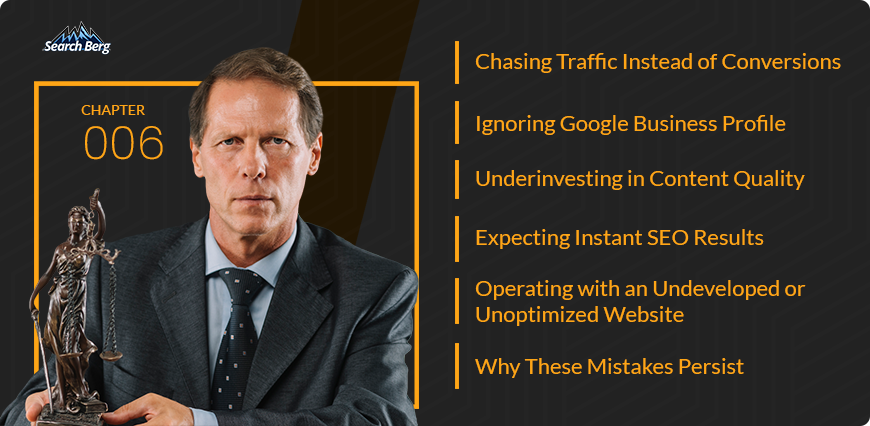
Chasing Traffic Instead of Conversions
One of the most frequent mistakes law firms make is measuring success by traffic volume rather than client-generating actions.
Not all traffic has equal value. A thousand visitors searching general legal information will not outperform a few dozen visitors actively searching for a lawyer in their city.
High-performing law firm campaigns prioritize:
- Service-specific searches
- Location-based intent
- Users ready to call, book, or submit a form
Across your case studies, success was driven by ranking for buyer-intent keywords, not broad informational queries. Firms that focus on traffic alone often overlook the fact that rankings, calls, and consultations, not page views, drive revenue.
Ignoring Google Business Profile
Despite its proven impact, Google Business Profile remains one of the most neglected assets in law firm marketing.
Many firms:
- Create a profile and never optimize it
- Leave services incomplete or outdated
- Fail to monitor calls or interactions
- Do not leverage profile activity to increase engagement
This oversight is costly.
In our data we found:
- Ron Marquez Law Corp generated 226 calls in five months directly from Google Business Profile.
- Rashidy & Associates recorded 252 calls over four months from GBP after optimization.
- Daniel Ogbeide Law increased calls from 14 to 140 after local SEO improvements.
Ignoring GBP means missing some of the highest-intent leads available, often from users ready to contact a firm immediately.
Underinvesting in Content Quality
Content is often treated as an SEO checkbox rather than a trust-building tool.
Low-quality, generic, or thin content fails on two levels:
- It does not satisfy Google’s quality standards for legal content.
- It does not build confidence with potential clients.
Legal content must be accurate, clear, and authoritative. This is especially critical because law firm websites fall under YMYL (Your Money or Your Life) standards, where Google expects higher levels of expertise and trustworthiness.
Your case studies show that:
- Rankings improved when service pages were rewritten for clarity and relevance.
- Conversion rates increased when content directly addressed client concerns.
- Authority strengthened when content aligned with actual legal search intent.
Firms that underinvest in content often struggle to rank and convert, even with strong technical SEO.
Expecting Instant SEO Results
SEO is not an immediate-return channel, and treating it as one leads to disappointment and poor decision-making.
Many law firms expect significant results within weeks. In reality:
- Early improvements often appear within 2–3 months
- Strong ranking momentum builds over 6–12 months
- Long-term results compound over time
Our case studies reinforce this reality:
- Rashidy & Associates saw major ranking gains within three months due to focused niche targeting.
- Daniel Ogbeide Law achieved sustained growth over multiple phases, scaling traffic from dozens to thousands.
- Mike Massey Law showed steady improvement over five months in competitive markets.
Firms that abandon SEO too early often restart from scratch later, losing time, momentum, and opportunity.
Operating with an Undeveloped or Unoptimized Website
A law firm website is not just a digital brochure, it is the central conversion platform.
Common issues include:
- Unclear service messaging
- Weak or missing calls-to-action
- Slow load times
- Poor mobile usability
- Confusing navigation
- Generic templates not designed for legal conversion
Several case studies highlight this point:
- Daniel Ogbeide Law experienced performance improvements after redesigning and optimizing service pages.
- Mike Massey Law strengthened rankings and engagement by refining page structure, internal linking, and content clarity.
Even strong SEO cannot compensate for a website that fails to guide visitors toward action.
Why These Mistakes Persist
Most of these issues persist because they are not immediately visible.
Lost leads don’t announce themselves. And Missed opportunities leave no trace.
However, when these mistakes are corrected, by focusing on intent, trust, clarity, and consistency, law firms see measurable improvements in rankings, calls, and consultations.
Chapter 7: How Law Firms Should Measure Digital Marketing Success
One of the biggest challenges law firms face with digital marketing is not execution, it’s measurement.
Many firms receive reports filled with rankings, impressions, and traffic numbers but still struggle to answer the most important question:
Is this generating real cases?
Effective measurement brings clarity. It allows law firms to understand what’s working, what needs improvement, and where to invest next. To do this properly, firms must look beyond surface-level metrics and focus on outcomes that connect directly to business growth.
Rankings vs. Leads vs. Revenue: Understanding the Difference
Each metric plays a role, but not all metrics matter equally.
Rankings
Keyword rankings show visibility progress. They indicate whether a law firm is appearing for relevant searches and whether SEO efforts are moving in the right direction.
However, rankings alone do not generate revenue. A firm can rank well and still receive few leads if:
- Keywords lack buyer intent
- Pages fail to convert
- Local visibility is weak
Rankings should be treated as leading indicators, not success benchmarks.
Leads
Leads represent actual user actions, phone calls, form submissions, consultation requests.
This is where digital marketing begins to prove its value. Leads indicate that potential clients are not just finding the firm, but actively engaging.
Across our case studies, we make sure our clients achievements have been recorded, for example :
- Ron Marquez Law Corp recorded 96 verified leadsthrough Google Analytics.
- Rashidy & Associates generated 49 organic contact form submissionsin three months.
- Daniel Ogbeide Law increased genuine monthly leads by 4%.
So basically we can say that leads connect visibility to opportunity.
Revenue
Revenue is the ultimate measure of success, but it is often harder to track directly.
While not every firm connects marketing data to case outcomes, understanding which channels consistently generate consultations helps identify high-quality lead sources. Over time, this allows firms to estimate return on investment with greater accuracy.
Google Analytics & Search Console: What Attorneys Need to Know
Law firms do not need to become data experts, but understanding the basics of two core tools is essential.
Google Analytics
Google Analytics tracks user behavior after someone visits the website. Key insights include:
- Where traffic is coming from (organic search, direct, referral)
- Which pages users visit most
- How long users stay on the site
- Which actions users complete (form submissions, thank-you pages)
Analytics helps firms understand what users do after they arrive.
Google Search Console
Search Console focuses on visibility before a visit happens. It shows:
- Which search queries trigger impressions
- How often pages appear in search results
- Click-through rates
- Average keyword positions
For example, Daniel Ogbeide Law used Search Console data to track:
- Click growth from 55 to over 1,100
- Impression growth from 1.8K to 158K
- Significant improvements in average position
Tracking Calls, Forms, and Consultations
For law firms, not every website interaction matters, only the ones that lead to real conversations do. That’s why high-performing legal marketing campaigns focus on tracking actions that signal genuine ntent.
At a minimum, this includes:
- Phone calls generated from the website
- Calls coming directly from the Google Business Profile
- Contact form submissions
- Consultation or case evaluation requests
Each of these actions represents a potential case and, ultimately, potential revenue.
What many law firms miss is that without proper tracking in place, strong marketing performance can look like failure. Traffic may increase, rankings may improve, and visibility may expand, yet none of it can be confidently tied to business growth if calls and forms aren’t being measured.
Call tracking and form tracking close this gap. They allow firms to see which pages, keywords, and locations actually drive inquiries, not just visits. This insight helps separate vanity metrics from meaningful outcomes and prevents firms from investing in strategies that look good on paper but don’t produce consultations.
More importantly, tracking reveals patterns. Firms can identify:
- Which practice areas generate the highest-quality leads
- Which locations convert best
- Which pages influence calls versus form submissions
- Where potential clients drop off before converting
When tracking is implemented correctly, marketing stops being a guessing game. Law firms gain clarity, confidence, and control over their growth — and every optimization decision can be tied back to real client interest rather than assumptions.
What Metrics Actually Matter to Attorneys
For law firms, the most valuable metrics are those tied to client acquisition and growth.
The metrics that matter most include:
- Number of qualified leads
- Source of leads (organic search, local, direct)
- Conversion rates from website visitors to inquiries
- Call volume from Google Business Profile
- Growth trends over time
Metrics that matter less on their own:
- Raw traffic numbers
- Impressions without engagement
- Rankings for low-intent keywords
When attorneys focus on the right data, digital marketing becomes less confusing and more predictable.
Why Proper Measurement Changes Everything
Measurement creates accountability.
It allows law firms to:
- Identify which services generate the most demand
- Improve underperforming pages
- Allocate budgets intelligently
- Scale successful strategies with confidence

Chapter 8: How Long SEO Takes for Law Firms (Based on Real Data)
One of the most common and most misunderstood, questions law firms ask about SEO is simple:
“How long will this take?”
The honest answer is that SEO is not instant, but it is predictable when done correctly. Unlike paid ads, where visibility stops the moment the budget pauses, SEO builds momentum over time. For law firms operating in competitive practice areas, understanding realistic timelines is critical to setting the right expectations and making smart marketing decisions.
Short-Term vs. Long-Term SEO Expectations
SEO operates on compounding growth, not immediate spikes. Early activity focuses on building trust with search engines and correcting foundational issues, while long-term efforts are what drive consistent lead flow and ROI.
In the short term, SEO is about:
- Fixing technical issues that prevent visibility
- Establishing topical relevance for practice areas
- Optimizing pages to align with how potential clients actually search
In the long term, SEO is about:
- Authority and trust accumulation
- Earning consistent top-of-page visibility
- Generating predictable, inbound client inquiries
Law firms that expect SEO to behave like advertising often get frustrated early. Firms that understand SEO as an asset, similar to building reputation or referral networks, see significantly stronger results over time.
What Law Firms Typically See in the First 3 Months
The first 90 days of SEO are foundational. During this period, results are rarely dramatic, but they are meaningful if you know what to look for.
Common outcomes within the first three months include:
- Improved site health and crawlability
- Better alignment between practice area pages and search intent
- Early ranking movement for long-tail and local keywords
- Increased impressions in Google Search Console, even if clicks are still modest
At this stage, Google is essentially reassessing the website. For law firms, this is especially important because legal websites fall under Your Money or Your Life (YMYL) standards, meaning Google evaluates them more cautiously.
The absence of immediate lead volume in the first few months does not indicate failure, it indicates that the groundwork is being laid correctly.
What Changes Between 6 and 12 Months
This is where SEO begins to justify the investment.
Between six and twelve months, well-executed SEO efforts typically result in:
- First-page rankings for priority practice area keywords
- Consistent visibility in local and organic search results
- Noticeable increases in phone calls and consultation requests
- Reduced dependency on paid advertising for baseline lead flow
For competitive legal markets, such as personal injury, family law, or estate planning, this timeline reflects the reality of outranking established firms with years of authority. SEO does not bypass competition; it outperforms it gradually.
By this point, firms often begin seeing SEO contribute directly to new client acquisition rather than just “traffic.”
Why Patience Beats Shortcuts in Legal SEO
Law firms are frequently approached with promises of:
- Overnight rankings
- Guaranteed placements
- Massive traffic increases in weeks
These shortcuts often involve tactics that violate Google’s guidelines or ignore the trust signals required for legal content. At best, they result in temporary gains. At worst, they cause long-term ranking suppression that is difficult to recover from.
Sustainable SEO success for law firms is built on:
- Authoritative content written for real client concerns
- Clear demonstration of expertise and credibility
- Consistent optimization rather than one-time fixes
Firms that stay patient and consistent typically see SEO outperform paid channels over time, both in cost efficiency and lead quality.
SEO as a Business Asset, Not a Campaign
The most successful law firms do not treat SEO as a short-term campaign. They treat it as infrastructure.
Once rankings are established:
- Each new piece of content strengthens existing authority
- Each backlink compounds previous gains
- Each optimization improves conversion rates across the site
This is why firms that commit to SEO for 12 months or more often experience exponential ROI compared to firms that stop prematurely.
SEO rewards consistency, credibility, and time, all qualities that align naturally with how strong law firms grow.
Outrow : Final Thoughts
Digital marketing works differently for law firms because it compounds. Unlike referrals or ads that stop the moment’s effort or spend pauses, SEO and local visibility continue generating opportunities long after the work is done.
When done correctly, every optimized page, ranking keyword, and strong Google Business Profile signal builds on the last. Over time, this creates predictable visibility, qualified inquiries, and a steady flow of consultations, without relying on chance.
The firms featured in this guide didn’t succeed by chasing trends or shortcuts. They focused on buyer intent, local authority, and measurable outcomes. That’s the difference between “having marketing” and having a growth system.
The right approach isn’t doing everything at once. It’s knowing when to invest, when to scale what’s working, and when to refine weak points that limit conversions.
For law firm owners, the takeaway is simple: digital marketing is no longer an experiment. It’s an infrastructure decision. Firms that treat it strategically gain control over growth, while others remain dependent on referrals and rising ad costs.