



How AI is Reshaping Google Ads Targeting
AI and Google Ads are now working together in deeper ways than ever before. As advertisers shift from manual keyword bidding to smart automation, the platform is evolving into a system where AI in Google Ads targeting plays a central role. Features like Smart Bidding, audience signals, Performance Max campaigns, and generative ad tools mean that much of the legacy work of selecting exact match keywords and manually defining audiences is being replaced or supplemented. This article explains how AI and Google Ads are interacting, what that means for targeting, and how you can stay ahead with a strategy adapted for 2025.
Understanding Google’s Shift Toward AI Targeting
The shift in Google Ads from manual settings toward machine-learning-driven decisions is evident. For example, Google’s AI Max for Search campaigns feature automates keyword matching and asset optimization, moving beyond the traditional exact-match keyword model.
Rather than relying solely on advertiser-entered keywords and bids, Google now uses models that incorporate many real-time signals (device, location, behavior patterns) and automatically adjust or expand targeting. This means the role of manual audience definitions, simple bid adjustments, and keyword lists is declining. The platform is also increasingly offering predictive insights and automation layers, allowing performance marketers to guide AI rather than execute every action manually. Automating parts of targeting helps scale campaigns and reduce the burden of micromanagement while leveraging first-party data, conversions and aggregated signals.
From Keywords to Intent – How Targeting Has Evolved
Historically, Google Ads targeting centered around keywords: exact match, phrase match, broad match, and negative keywords. Marketers would build lists of search terms and bid accordingly. Over time, features like broad match modified and dynamic search ads supplemented that.
Today, the focus is moving from raw keywords to user intent and signals. That means keywords matter, but they’re one piece of a larger puzzle. AI in Google Ads targeting now analyzes query context, browsing behavior, demographics, device patterns, and even landing-page signals to determine which ad to show to which user. For example, Google’s documentation on AI Max explains how “search term matching” expands beyond just the keywords you entered.
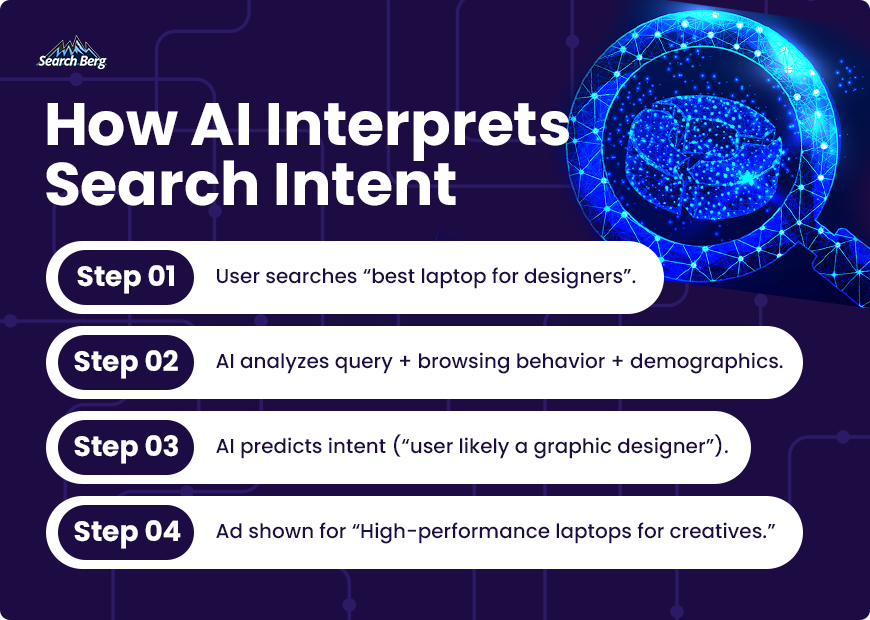
Therefore, “AI keywords for Google Ads” is a concept: you don’t just enter keywords; you provide data and context (landing pages, audience seeds, conversion signals) and the system infers which searchers to target. This offers deeper reach and relevance when set up correctly. However, it also means that keyword lists remain important for control, but AI augments them. Marketers now must manage intent signals, audience data, and creative assets, not just keywords.
How AI Analyzes Data to Refine Targeting
AI systems in Google Ads use vast amounts of data to refine who to target, when, and with what message. Inputs include: historical conversion data, user signals (device type, location, search history), browsing behaviour, landing page engagement, and even aggregated privacy-safe data.
For instance, Google’s help page on AI Max for Search describes how “asset optimization” and “search term matching” allow AI to learn from your existing keywords, ads, and landing pages to serve queries you might not have targeted directly.
Another example: with privacy changes and cookie phase-outs, Google is shifting to signals like the “Topics API” and the Privacy Sandbox that rely more on aggregated data and less on third-party cookies. The move toward privacy-friendly targeting is a core part of how AI in Google Ads targeting must evolve.
AI-Powered Audience Signals and Predictive Targeting
Google Ads offers features like Audience Signals (especially in Performance Max and Demand Gen campaigns) that let advertisers provide starting data, e.g., first-party lists, website visitors, or customer match data. The AI then builds upon those seeds to identify similar or higher-value users.
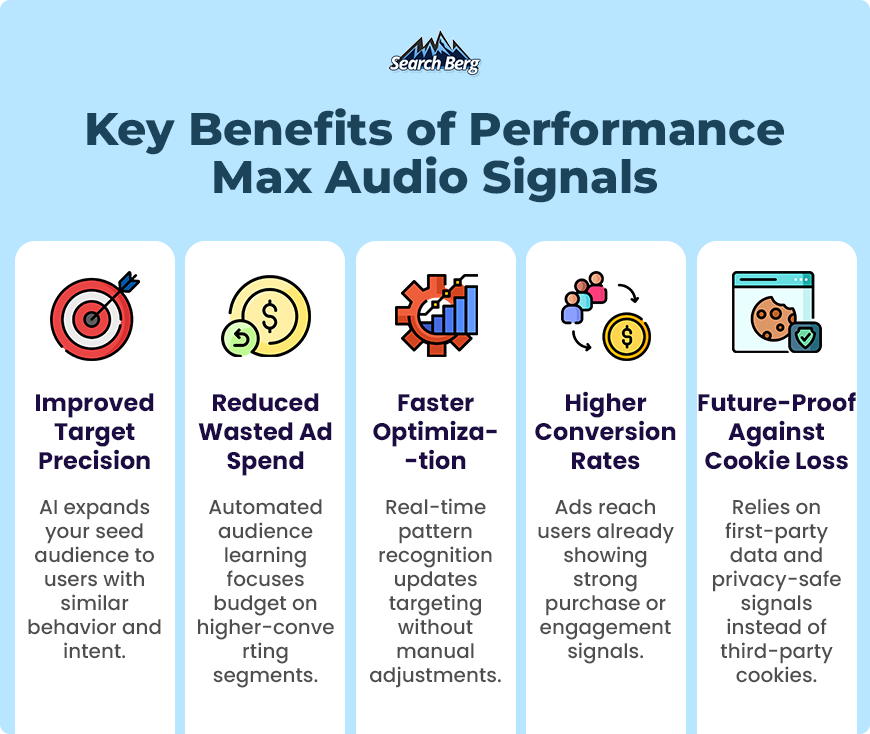
Because AI analyzes patterns in your audience data along with signals around user behavior, you can allow the system to find segments you might not have known existed. Marketers can guide this by defining “seed” audiences and giving the system conversion goals and value metrics. This is how AI in Google Ads targeting works in practice.
Ultimately, this results in more relevant ad placements, less wasted spend, and better performance, assuming your data is clean, correctly tagged, and that the correct signals are provided. The difference between Audience Signals and traditional manual audience lists illustrates the shift toward intelligent, AI-driven targeting.
Conversational and Generative AI in Google Ads
Generative AI is now part of how campaigns are built. In Google Ads, features like automatic ad asset generation, headline/description suggestions, and dynamic creatives are more common. Google Ads now includes features like text customization and final URL expansion that use AI to automatically build and adjust ad assets to match user intent and search context better.
Moreover, Google is experimenting with ads within users’ AI Mode search experiences (an AI-driven interface in Google Search), where ad placements may appear within conversational queries rather than in classic SERPs.
These developments allow advertisers to use Google Ads in AI mode, where you provide high-level goals, creative assets, audience seeds, and AI fills in much of the rest, i.e., copy, formatting, targeting, and bid adjustments. While automation handles volume and testing, human oversight remains vital: you must review asset results, creative direction, and audience definitions.
Smart Bidding & Automation – AI at the Core of Ad Delivery
Smart bidding has been a core Google Ads feature for years (Target CPA, Target ROAS, Maximize Conversions). In 2025, these are further powered by AI and conversion modelling. For example, Smart Bidding now integrates conversion modelling, better auction-time signals, and asset performance to optimise bids.
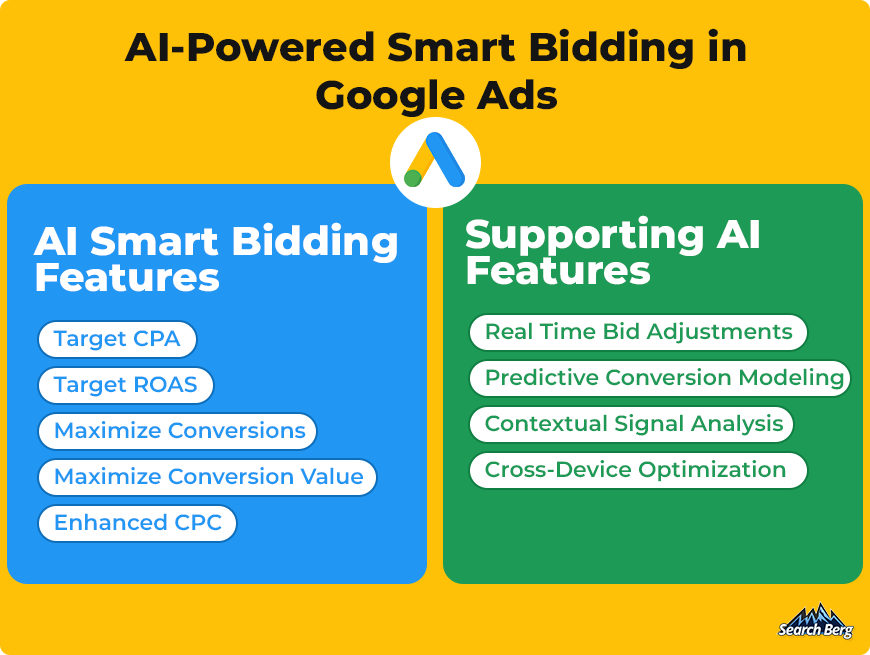
With Smart Bidding, AI adjusts bids in real-time based on device, location, time, past behaviour, and predicted conversion probability. Because of this, advertisers no longer need to manually adjust bids across every dimension; instead, they set goals and let AI optimize.
- The benefit: improved efficiency, higher scalability, and better ROI.
- The caveat: you must ensure accurate tracking and conversion data, or the AI will be working with faulty signals.
In essence, Smart Bidding illustrates how AI and Google Ads are now deeply intertwined; targeting, bidding, creative, and measurement are integrated into more intelligent automation.
The Role of Privacy & Responsible AI in Targeting
As AI plays a larger role in advertising, issues of privacy, transparency and ethical use come into sharper focus. Google has introduced Consent Mode v2, Enhanced Conversions, and other controls to help advertisers use first-party data and aggregated signals in a privacy-safe way.
Google’s updates include limiting certain list durations (e.g., Customer Match) and restricting targeting methods that might conflict with regulations. The shift toward privacy-safe signals means AI in Google Ads targeting must rely on high-quality first-party data rather than just third-party cookies.
Responsible use means advertisers must monitor for bias, maintain clear disclosures, respect user consent, and balance automation with human oversight. AI will optimize targeting, but you still decide goals, guard data quality, and ensure transparency. This is crucial when dealing with customer data, audiences, and ad relevance.
Primary Benefits of AI in Google Ads Targeting
The shift to AI-powered targeting in Google Ads offers tangible advantages:
- Higher relevance: AI matches user intent more precisely than rigid keyword lists.
- Reduced manual effort: Smart bidding, asset automation, and audience signals free up time.
- Real-time optimisation: AI adjusts bids and placements instantly based on signals and performance.
- Better audience insights: Predictive targeting finds segments you might miss manually.
That said, the human factor remains. Strategy, creative direction, and quality data still matter. AI amplifies your results and you steer the ship. When you combine AI’s scale with skilled oversight, your campaigns benefit from both precision and performance. The result: smarter performance without simply throwing money at keywords.
Challenges and Limitations of AI-Driven Targeting
With all its promise, AI in Google Ads targeting brings challenges:
- Data dependency: Poor conversion tracking or messy first-party data undermines AI’s learning.
- Loss of manual control: Some advertisers worry that automation reduces visibility into decision-making or leads to unwanted placements.
- Bias & transparency: If the data fed into models reflects unbalanced segments, targeting may skew. Oversight is needed.
- “Set-and-forget” risk: Advertisers should not assume automation will solve everything. Performance must still be monitored.
The solution: maintain tracking hygiene, monitor performance regularly, and combine automation with strategic human review. That hybrid approach ensures AI serves your goals, not the other way around.
Contact Us to Build Smarter Google Ads Campaigns with AI
If you’re ready to leverage AI and Google Ads to drive more efficient, high-intent targeting, the right partner can make the difference. We help structure your data, set up seed audiences, define clear conversion goals, implement Smart Bidding, and guide creative automation. AI should free you to focus on strategy, rather than overwhelm you with black-box decisions. Call Search Berg today at 732-479-2420 or contact us online and let us help you design smarter ad campaigns that deliver results and keep you ahead of the automation curve.
FAQs on AI and Google Ads Targeting
Q1: How does AI improve targeting in Google Ads?
AI analyses real-time signals, i.e., search intent, demographics, context, device, and browsing behaviour, and uses them to match ads more relevantly than purely keyword-based targeting.
Q2: Will manual keyword targeting disappear?
No. Manual keywords still play a role. However, their dominance is reduced. AI keywords for Google Ads and predictive intent modelling now supplement, and sometimes replace, exact-match emphasis.
Q3: What is “AI mode” in Google Ads?
“AI mode” refers to campaign types or features where Google uses generative and machine-learning tools to automate targeting, assets, and bid decisions (for example, via AI Max for Search or Performance Max).
Q4: Can AI choose ad copy and visuals automatically?
Yes. Google’s asset tools use your landing pages, audience data, and keywords to generate headlines, descriptions, and even automatically select landing pages. But you still review and guide the process.
Q5: Does AI make advertising more expensive?
Not necessarily. When set up correctly, AI reduces wasted spend, improves relevance, and can reduce CPA. But poor data or a lack of oversight can lead to wasted budget or wrong placements. The key is clean, quality data and well-defined goals.
Subscribe for More Insights
Explore more news, knowledge, and insights related to Google Business Profile and its uses.
No spam, just expert advice!